Deep Reinforcement Learning for Keras.

Overview

Deep Reinforcement Learning for Keras

Build Status Documentation License Join the chat at https://gitter.im/keras-rl/Lobby

What is it?

keras-rl implements some state-of-the art deep reinforcement learning algorithms in Python and seamlessly integrates with the deep learning library Keras.

Furthermore, keras-rl works with OpenAI Gym out of the box. This means that evaluating and playing around with different algorithms is easy.

Of course you can extend keras-rl according to your own needs. You can use built-in Keras callbacks and metrics or define your own. Even more so, it is easy to implement your own environments and even algorithms by simply extending some simple abstract classes. Documentation is available online.

What is included?

As of today, the following algorithms have been implemented:

  • Deep Q Learning (DQN) [1], [2]
  • Double DQN [3]
  • Deep Deterministic Policy Gradient (DDPG) [4]
  • Continuous DQN (CDQN or NAF) [6]
  • Cross-Entropy Method (CEM) [7], [8]
  • Dueling network DQN (Dueling DQN) [9]
  • Deep SARSA [10]
  • Asynchronous Advantage Actor-Critic (A3C) [5]
  • Proximal Policy Optimization Algorithms (PPO) [11]

You can find more information on each agent in the doc.

Installation

  • Install Keras-RL from Pypi (recommended):
pip install keras-rl
  • Install from Github source:
git clone https://github.com/keras-rl/keras-rl.git
cd keras-rl
python setup.py install

Examples

If you want to run the examples, you'll also have to install:

For atari example you will also need:

  • Pillow: pip install Pillow
  • gym[atari]: Atari module for gym. Use pip install gym[atari]

Once you have installed everything, you can try out a simple example:

python examples/dqn_cartpole.py

This is a very simple example and it should converge relatively quickly, so it's a great way to get started! It also visualizes the game during training, so you can watch it learn. How cool is that?

Some sample weights are available on keras-rl-weights.

If you have questions or problems, please file an issue or, even better, fix the problem yourself and submit a pull request!

External Projects

You're using Keras-RL on a project? Open a PR and share it!

Visualizing Training Metrics

To see graphs of your training progress and compare across runs, run pip install wandb and add the WandbLogger callback to your agent's fit() call:

from rl.callbacks import WandbLogger

...

agent.fit(env, nb_steps=50000, callbacks=[WandbLogger()])

For more info and options, see the W&B docs.

Citing

If you use keras-rl in your research, you can cite it as follows:

@misc{plappert2016kerasrl,
    author = {Matthias Plappert},
    title = {keras-rl},
    year = {2016},
    publisher = {GitHub},
    journal = {GitHub repository},
    howpublished = {\url{https://github.com/keras-rl/keras-rl}},
}

References

  1. Playing Atari with Deep Reinforcement Learning, Mnih et al., 2013
  2. Human-level control through deep reinforcement learning, Mnih et al., 2015
  3. Deep Reinforcement Learning with Double Q-learning, van Hasselt et al., 2015
  4. Continuous control with deep reinforcement learning, Lillicrap et al., 2015
  5. Asynchronous Methods for Deep Reinforcement Learning, Mnih et al., 2016
  6. Continuous Deep Q-Learning with Model-based Acceleration, Gu et al., 2016
  7. Learning Tetris Using the Noisy Cross-Entropy Method, Szita et al., 2006
  8. Deep Reinforcement Learning (MLSS lecture notes), Schulman, 2016
  9. Dueling Network Architectures for Deep Reinforcement Learning, Wang et al., 2016
  10. Reinforcement learning: An introduction, Sutton and Barto, 2011
  11. Proximal Policy Optimization Algorithms, Schulman et al., 2017
You might also like...
Distributed Deep learning with Keras & Spark

Elephas: Distributed Deep Learning with Keras & Spark Elephas is an extension of Keras, which allows you to run distributed deep learning models at sc

QKeras: a quantization deep learning library for Tensorflow Keras

QKeras github.com/google/qkeras QKeras 0.8 highlights: Automatic quantization using QKeras; Stochastic behavior (including stochastic rouding) is disa

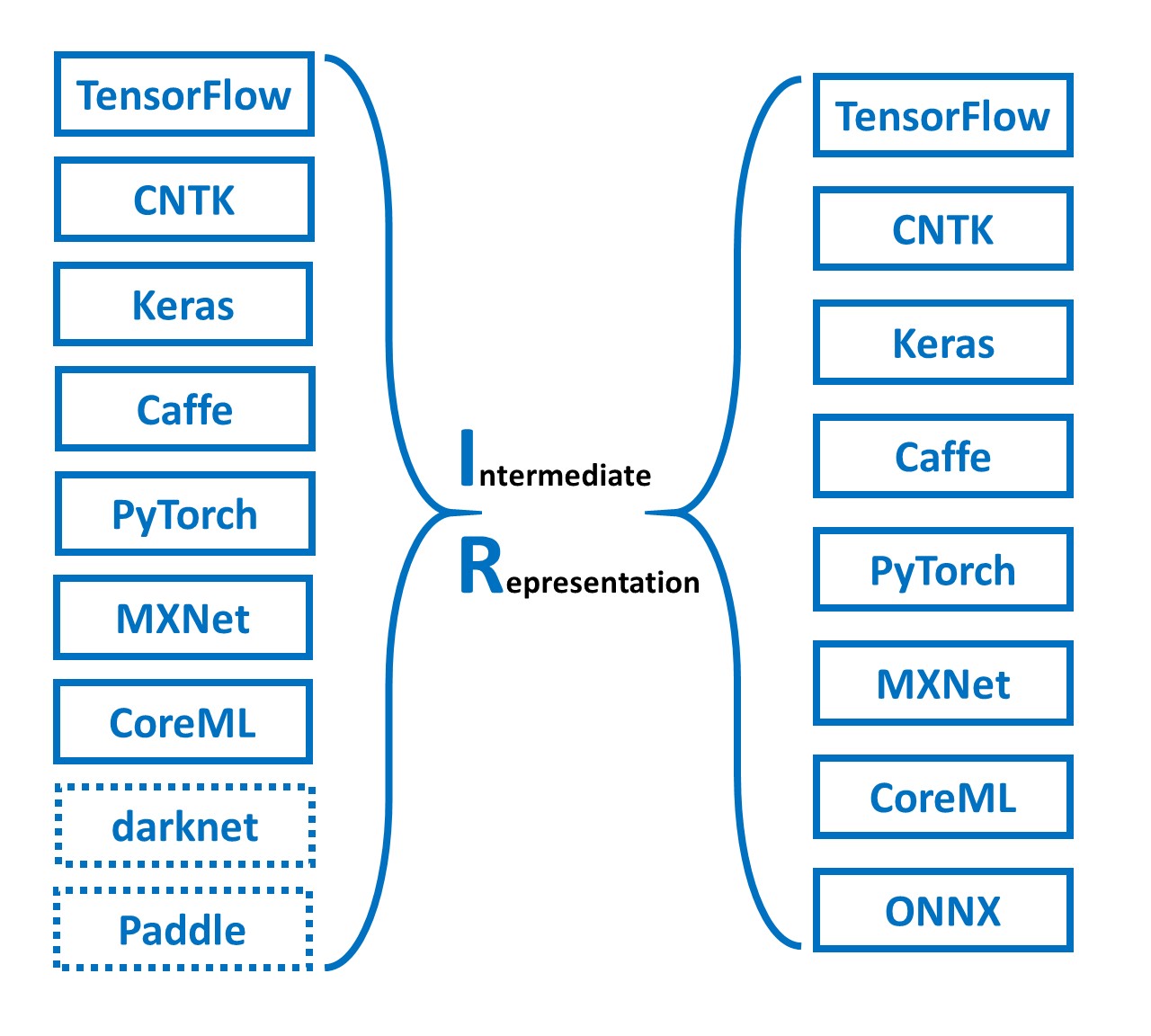
MMdnn is a set of tools to help users inter-operate among different deep learning frameworks. E.g. model conversion and visualization. Convert models between Caffe, Keras, MXNet, Tensorflow, CNTK, PyTorch Onnx and CoreML.

MMdnn MMdnn is a comprehensive and cross-framework tool to convert, visualize and diagnose deep learning (DL) models. The "MM" stands for model manage

Advanced Deep Learning with TensorFlow 2 and Keras (Updated for 2nd Edition)

Advanced Deep Learning with TensorFlow 2 and Keras (Updated for 2nd Edition)

Keras like implementation of Deep Learning architectures from scratch using numpy.

Mini-Keras Keras like implementation of Deep Learning architectures from scratch using numpy. How to contribute? The project contains implementations

Realtime Face Anti Spoofing with Face Detector based on Deep Learning using Tensorflow/Keras and OpenCV

Realtime Face Anti-Spoofing Detection 🤖 Realtime Face Anti Spoofing Detection with Face Detector to detect real and fake faces Please star this repo

This source code is implemented using keras library based on "Automatic ocular artifacts removal in EEG using deep learning"

CSP_Deep_EEG This source code is implemented using keras library based on "Automatic ocular artifacts removal in EEG using deep learning" {https://www

Vision Deep-Learning using Tensorflow, Keras.

Welcome! I am a computer vision deep learning developer working in Korea. This is my blog, and you can see everything I've studied here. https://www.n

A deep learning network built with TensorFlow and Keras to classify gender and estimate age.

Convolutional Neural Network (CNN). This repository contains a source code of a deep learning network built with TensorFlow and Keras to classify gend

Releases(v0.4.2)
Source code for our paper "Learning to Break Deep Perceptual Hashing: The Use Case NeuralHash"

Learning to Break Deep Perceptual Hashing: The Use Case NeuralHash Abstract: Apple recently revealed its deep perceptual hashing system NeuralHash to

<a href=[email protected]"> 11 Dec 03, 2022
Mini Software that give reminder to drink water as per your weight.

Water Notification Desktop Python The Mini Software built in Python (tkinter) that will remind you to drink water on specific time span based on your

Om Jogani 5 Dec 16, 2022
NudeNet: Neural Nets for Nudity Classification, Detection and selective censoring

NudeNet: Neural Nets for Nudity Classification, Detection and selective censoring Uncensored version of the following image can be found at https://i.

notAI.tech 1.1k Dec 29, 2022
The code of paper 'Learning to Aggregate and Personalize 3D Face from In-the-Wild Photo Collection'

Learning to Aggregate and Personalize 3D Face from In-the-Wild Photo Collection Pytorch implemetation of paper 'Learning to Aggregate and Personalize

Tencent YouTu Research 136 Dec 29, 2022
CoCosNet v2: Full-Resolution Correspondence Learning for Image Translation

CoCosNet v2: Full-Resolution Correspondence Learning for Image Translation (CVPR 2021, oral presentation) CoCosNet v2: Full-Resolution Correspondence

Microsoft 308 Dec 07, 2022
Python Implementation of algorithms in Graph Mining, e.g., Recommendation, Collaborative Filtering, Community Detection, Spectral Clustering, Modularity Maximization, co-authorship networks.

Graph Mining Author: Jiayi Chen Time: April 2021 Implemented Algorithms: Network: Scrabing Data, Network Construbtion and Network Measurement (e.g., P

Jiayi Chen 3 Mar 03, 2022
Language Models Can See: Plugging Visual Controls in Text Generation

Language Models Can See: Plugging Visual Controls in Text Generation Authors: Yixuan Su, Tian Lan, Yahui Liu, Fangyu Liu, Dani Yogatama, Yan Wang, Lin

Yixuan Su 195 Dec 22, 2022
Location-Sensitive Visual Recognition with Cross-IOU Loss

The trained models are temporarily unavailable, but you can train the code using reasonable computational resource. Location-Sensitive Visual Recognit

Kaiwen Duan 146 Dec 25, 2022
Efficiently Disentangle Causal Representations

Efficiently Disentangle Causal Representations Install dependency pip install -r requirements.txt Main experiments Causality direction prediction cd

4 Apr 01, 2022
A unet implementation for Image semantic segmentation

Unet-pytorch a unet implementation for Image semantic segmentation 参考网上的Unet做分割的代码,做了一个针对kaggle地盐识别的,请去以下地址获取数据集: https://www.kaggle.com/c/tgs-salt-id

Rabbit 3 Jun 29, 2022
Preprocessed Datasets for our Multimodal NER paper

Unified Multimodal Transformer (UMT) for Multimodal Named Entity Recognition (MNER) Two MNER Datasets and Codes for our ACL'2020 paper: Improving Mult

76 Dec 21, 2022
Unofficial pytorch implementation of paper "One-Shot Free-View Neural Talking-Head Synthesis for Video Conferencing"

One-Shot Free-View Neural Talking Head Synthesis Unofficial pytorch implementation of paper "One-Shot Free-View Neural Talking-Head Synthesis for Vide

ZLH 406 Dec 23, 2022
Fast and Easy Infinite Neural Networks in Python

Neural Tangents ICLR 2020 Video | Paper | Quickstart | Install guide | Reference docs | Release notes Overview Neural Tangents is a high-level neural

Google 1.9k Jan 09, 2023
A GUI to automatically create a TOPAS-readable MLC simulation file

Python script to create a TOPAS-readable simulation file descriring a Multi-Leaf-Collimator. Builds the MLC using the data from a 3D .stl file.

Sebastian Schäfer 0 Jun 19, 2022
Sample code from the Neural Networks from Scratch book.

Neural Networks from Scratch (NNFS) book code Code from the NNFS book (https://nnfs.io) separated by chapter.

Harrison 172 Dec 31, 2022
Code & Models for Temporal Segment Networks (TSN) in ECCV 2016

Temporal Segment Networks (TSN) We have released MMAction, a full-fledged action understanding toolbox based on PyTorch. It includes implementation fo

1.4k Jan 01, 2023
Prososdy Morph: A python library for manipulating pitch and duration in an algorithmic way, for resynthesizing speech.

ProMo (Prosody Morph) Questions? Comments? Feedback? Chat with us on gitter! A library for manipulating pitch and duration in an algorithmic way, for

Tim 71 Jan 02, 2023
Official code of Team Yao at Multi-Modal-Fact-Verification-2022

Official code of Team Yao at Multi-Modal-Fact-Verification-2022 A Multi-Modal Fact Verification dataset released as part of the De-Factify workshop in

Wei-Yao Wang 11 Nov 15, 2022
Datasets, tools, and benchmarks for representation learning of code.

The CodeSearchNet challenge has been concluded We would like to thank all participants for their submissions and we hope that this challenge provided

GitHub 1.8k Dec 25, 2022
Extracts essential Mediapipe face landmarks and arranges them in a sequenced order.

simplified_mediapipe_face_landmarks Extracts essential Mediapipe face landmarks and arranges them in a sequenced order. The default 478 Mediapipe face

Irfan 13 Oct 04, 2022