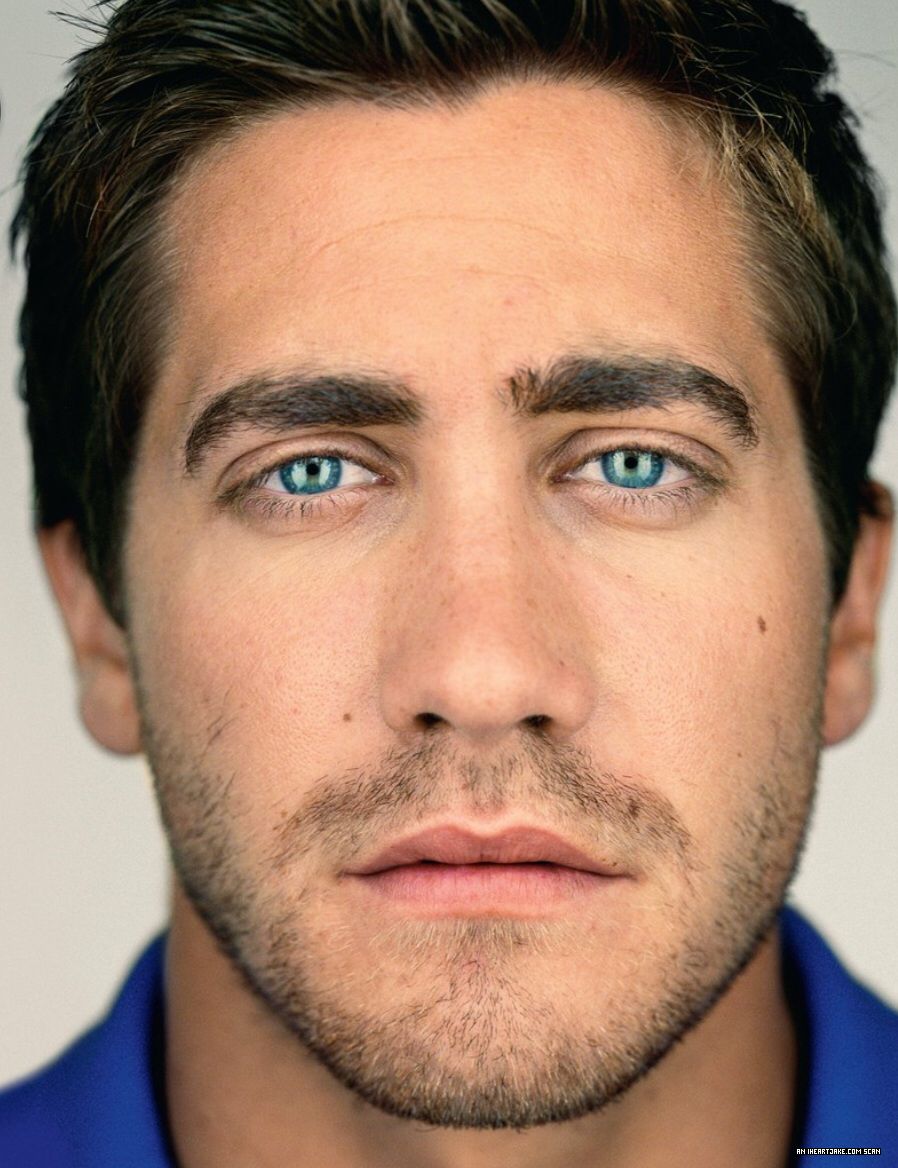
High accurate tool for automatic faces detection with landmarks

Overview

faces_detanator

Python

High accurate tool for automatic faces detection with landmarks.

The library is based on public detectors with high accuracy (TinaFace, Retinaface, SCRFD, ...) which are combined together to form an ansamle. All models predict detections, then voting algorithm performs aggregation.

screen shot 2017-08-07 at 12 18 15 pm screen shot 2017-08-07 at 12 18 15 pm screen shot 2017-08-07 at 12 18 15 pm

🛠️ Prerequisites

  1. Install Docker
  2. Install Nvidia Docker Container Runtime
  3. Install nvidia-container-runtime: apt-get install nvidia-container-runtime
  4. Set "default-runtime" : "nvidia" in /etc/docker/daemon.json:
    {
        "default-runtime": "nvidia",
        "runtimes": {
            "nvidia": {
                "path": "nvidia-container-runtime",
                "runtimeArgs": []
            }
        }
    }
  5. Restart Docker: systemctl restart docker
  6. Install git-lfs to pull artifacts: git lfs install

🚀   Quickstart

docker can require sudo permission and it is used in run.py script. So in this case run run.py script with sudo permission or add your user to docker group.

# clone project
https://github.com/IgorHoholko/faces_detanator

# [OPTIONAL] create virtual enviroment
virtualenv venv --python=python3.7
source venv/bin/activate

# install requirements
pip install -r requirements.txt

💥 Annotate your images

To start annotating, run the command:

python run.py -i <path_to_your_images>

For more information run:

python run.py -h

😱 More functions?

You can visualize your results:

python -m helpers.draw_output -i <your_meta> -h

You can filter your metadata by threshold after it is formed. Just run:

python -m helpers.filter_output_by_conf -i <your_meta> -t <thres> -h

👀 Adding new detectors for ansamble

To add new detector to ansamble you need to perform the next steps:

Take a look at existing detectors to make process easier.

  1. Create a folder for your detector <detector> in detectors/ folder.
  2. Prepare inference script for your detector. First, define "-i", "--input" argparse parameter which is responsible for input. The script to process the input:
if args.input.split('.')[-1] in ('jpg', 'png'):
    img_paths = [args.input]
else:
    img_paths = glob.glob(f"{args.input}/**/*.jpg", recursive=True)
    img_paths.extend(  glob.glob(f"{args.input}/**/*.png", recursive=True) )
  1. Next create "-o", "--output" argparse parameter. The place where annotation will be saved
  2. Now you need to save your annotations in required format. The script to save annotations looks like this:
data = []
for ipath, (bboxes, kpss) in output.items():
    line = [ipath, str(len(bboxes)), '$d']
    for i in range(len(bboxes)):
        conf = bboxes[i][-1]
        bbox = bboxes[i][:-1]
        bbox = list(map(int, bbox))
        bbox = list(map(str, bbox))

        landmarks = np.array(kpss[i]).astype(int).flatten()
        landmarks = list(map(str, landmarks))
        line.append(str(conf))
        line.extend(bbox)
        line.extend(landmarks)

    data.append(' '.join(line))

with open(os.path.join(args.output, 'meta.txt'), 'w') as f:
    f.write('\n'.join(data))

If your detector doesn't provide landmarks - set landmarks to be array with all -1

  1. When inference script is ready, create entrypoint.sh in the root of <detector> folder. entrypoint.sh describes the logic how to infer your detector. It can look like this:
#!/bin/bash
source venv/bin/activate
python3 tools/scrfd.py -s outputs/ "$@"

IMPORTANT set -s here to outputs.

  1. Now create Dockerfile for your detector with defined earlier entrypoint.
  2. Add your detector to settings.yaml by the sample.
  3. Done!
You might also like...
A simple rest api serving a deep learning model that classifies human gender based on their faces. (vgg16 transfare learning)

this is a simple rest api serving a deep learning model that classifies human gender based on their faces. (vgg16 transfare learning)

Simple Python project using Opencv and datetime package to recognise faces and log attendance data in a csv file.

Attendance-System-based-on-Facial-recognition-Attendance-data-stored-in-csv-file- Simple Python project using Opencv and datetime package to recognise

This repo tries to recognize faces in the dataset you created

YÜZ TANIMA SİSTEMİ Bu repo oluşturacağınız yüz verisetlerini tanımaya çalışan ma

Code of 3D Shape Variational Autoencoder Latent Disentanglement via Mini-Batch Feature Swapping for Bodies and Faces

3D Shape Variational Autoencoder Latent Disentanglement via Mini-Batch Feature Swapping for Bodies and Faces Installation After cloning the repo open

Computational inteligence project on faces in the wild dataset

Table of Contents The general idea How these scripts work? Loading data Needed modules and global variables Parsing the arrays in dataset Extracting a

Automatic self-diagnosis program (python required)Automatic self-diagnosis program (python required)

auto-self-checker 자동으로 자가진단 해주는 프로그램(python 필요) 중요 이 프로그램이 실행될때에는 절대로 마우스포인터를 움직이거나 키보드를 건드리면 안된다(화면인식, 마우스포인터로 직접 클릭) 사용법 프로그램을 구동할 폴더 내의 cmd창에서 pip

Code for ACM MM2021 paper "Complementary Trilateral Decoder for Fast and Accurate Salient Object Detection"

CTDNet The PyTorch code for ACM MM2021 paper "Complementary Trilateral Decoder for Fast and Accurate Salient Object Detection" Requirements Python 3.6

Face Library is an open source package for accurate and real-time face detection and recognition

Face Library Face Library is an open source package for accurate and real-time face detection and recognition. The package is built over OpenCV and us

A unofficial pytorch implementation of PAN(PSENet2): Efficient and Accurate Arbitrary-Shaped Text Detection with Pixel Aggregation Network

Efficient and Accurate Arbitrary-Shaped Text Detection with Pixel Aggregation Network Requirements pytorch 1.1+ torchvision 0.3+ pyclipper opencv3 gcc

Releases(0.1.0)
Owner
Ihar
Ihar
BC3407-Group-5-Project - BC3407 Group Project With Python

BC3407-Group-5-Project As the world struggles to contain the ever-changing varia

1 Jan 26, 2022
A library for implementing Decentralized Graph Neural Network algorithms.

decentralized-gnn A package for implementing and simulating decentralized Graph Neural Network algorithms for classification of peer-to-peer nodes. De

Multimedia Knowledge and Social Analytics Lab 5 Nov 07, 2022
use machine learning to recognize gesture on raspberrypi

Raspberrypi_Gesture-Recognition use machine learning to recognize gesture on raspberrypi 說明 利用 tensorflow lite 訓練手部辨識模型 分辨 "剪刀"、"石頭"、"布" 之手勢 再將訓練模型匯入

1 Dec 10, 2021
A small demonstration of using WebDataset with ImageNet and PyTorch Lightning

A small demonstration of using WebDataset with ImageNet and PyTorch Lightning

Tom 50 Dec 16, 2022
InterFaceGAN - Interpreting the Latent Space of GANs for Semantic Face Editing

InterFaceGAN - Interpreting the Latent Space of GANs for Semantic Face Editing Figure: High-quality facial attributes editing results with InterFaceGA

GenForce: May Generative Force Be with You 1.3k Jan 09, 2023
ROSITA: Enhancing Vision-and-Language Semantic Alignments via Cross- and Intra-modal Knowledge Integration

ROSITA News & Updates (24/08/2021) Release the demo to perform fine-grained semantic alignments using the pretrained ROSITA model. (15/08/2021) Releas

Vision and Language Group@ MIL 48 Dec 23, 2022
Reproducing-BowNet: Learning Representations by Predicting Bags of Visual Words

Reproducing-BowNet Our reproducibility effort based on the 2020 ML Reproducibility Challenge. We are reproducing the results of this CVPR 2020 paper:

6 Mar 16, 2022
Clustering is a popular approach to detect patterns in unlabeled data

Visual Clustering Clustering is a popular approach to detect patterns in unlabeled data. Existing clustering methods typically treat samples in a data

Tarek Naous 24 Nov 11, 2022
Unofficial implementation of Point-Unet: A Context-Aware Point-Based Neural Network for Volumetric Segmentation

Point-Unet This is an unofficial implementation of the MICCAI 2021 paper Point-Unet: A Context-Aware Point-Based Neural Network for Volumetric Segment

Namt0d 9 Dec 07, 2022
Interpolation-based reduced-order models

Interpolation-reduced-order-models Interpolation-based reduced-order models High-fidelity computational fluid dynamics (CFD) solutions are time consum

Donovan Blais 1 Jan 10, 2022
2021 National Underwater Robotics Vision Optics

2021-National-Underwater-Robotics-Vision-Optics 2021年全国水下机器人算法大赛-光学赛道-B榜精度第18名 (Kilian_Di的团队:A榜[email pro

Di Chang 9 Nov 04, 2022
Unofficial implementation of Proxy Anchor Loss for Deep Metric Learning

Proxy Anchor Loss for Deep Metric Learning Unofficial pytorch, tensorflow and mxnet implementations of Proxy Anchor Loss for Deep Metric Learning. Not

Geonmo Gu 3 Jun 09, 2021
OpenMMLab Image and Video Editing Toolbox

Introduction MMEditing is an open source image and video editing toolbox based on PyTorch. It is a part of the OpenMMLab project. The master branch wo

OpenMMLab 3.9k Jan 04, 2023
[TIP 2020] Multi-Temporal Scene Classification and Scene Change Detection with Correlation based Fusion

Multi-Temporal Scene Classification and Scene Change Detection with Correlation based Fusion Code for Multi-Temporal Scene Classification and Scene Ch

Lixiang Ru 33 Dec 12, 2022
GT4SD, an open-source library to accelerate hypothesis generation in the scientific discovery process.

The GT4SD (Generative Toolkit for Scientific Discovery) is an open-source platform to accelerate hypothesis generation in the scientific discovery process. It provides a library for making state-of-t

Generative Toolkit 4 Scientific Discovery 142 Dec 24, 2022
NVIDIA container runtime

nvidia-container-runtime A modified version of runc adding a custom pre-start hook to all containers. If environment variable NVIDIA_VISIBLE_DEVICES i

NVIDIA Corporation 938 Jan 06, 2023
Implementation of Segnet, FCN, UNet , PSPNet and other models in Keras.

Image Segmentation Keras : Implementation of Segnet, FCN, UNet, PSPNet and other models in Keras. Implementation of various Deep Image Segmentation mo

Divam Gupta 2.6k Jan 05, 2023
YOLOv4-v3 Training Automation API for Linux

This repository allows you to get started with training a state-of-the-art Deep Learning model with little to no configuration needed! You provide your labeled dataset or label your dataset using our

BMW TechOffice MUNICH 626 Dec 31, 2022
Collection of NLP model explanations and accompanying analysis tools

Thermostat is a large collection of NLP model explanations and accompanying analysis tools. Combines explainability methods from the captum library wi

126 Nov 22, 2022
Multi-agent reinforcement learning algorithm and environment

Multi-agent reinforcement learning algorithm and environment [en/cn] Pytorch implements multi-agent reinforcement learning algorithms including IQL, Q

万鲲鹏 7 Sep 20, 2022