Armer Driver





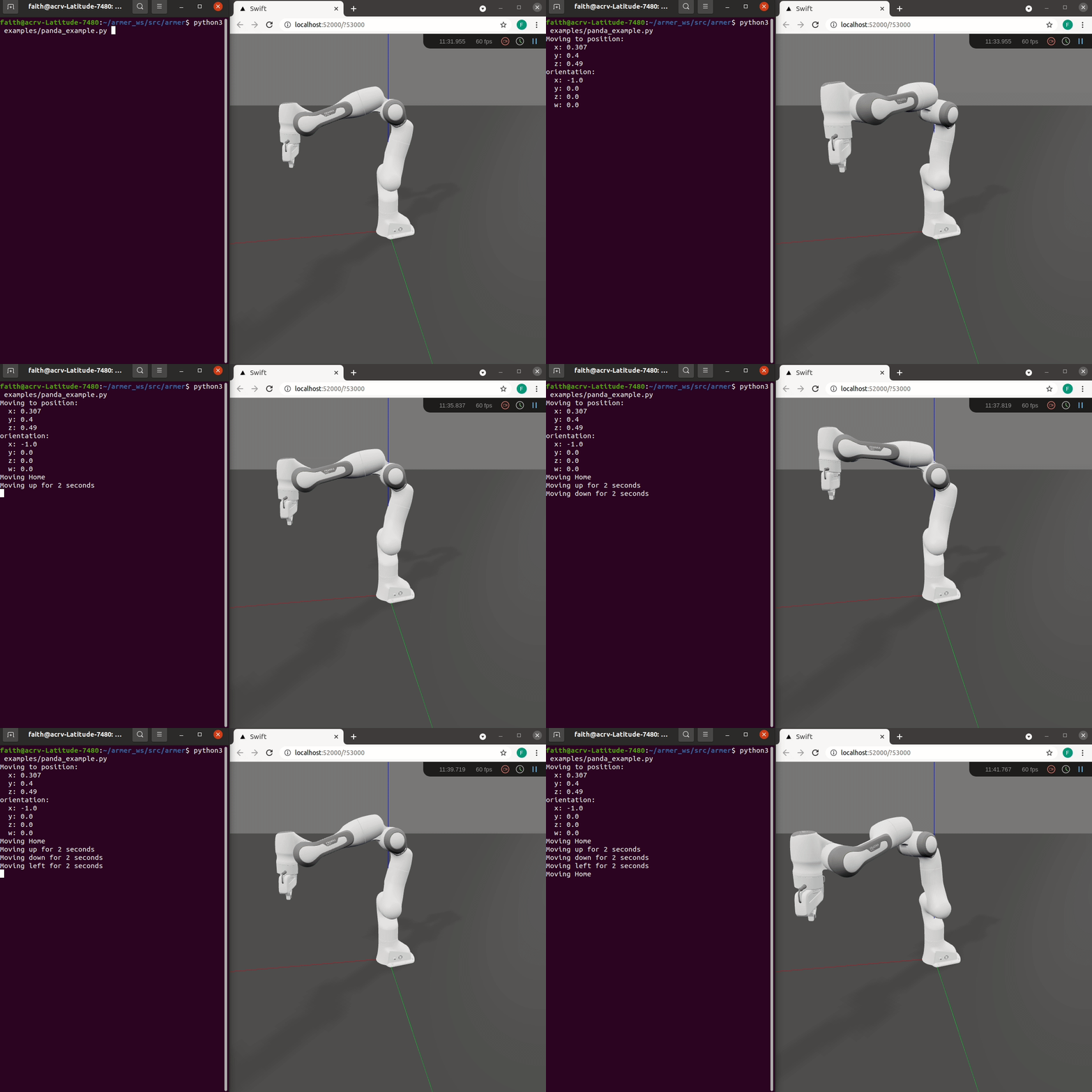


Armer aims to provide an interface layer between the hardware drivers of a robotic arm giving the user control in several ways:
- Joint velocity control
- Joint position control
- End effector Cartesian velocity control
- End effector Cartesian position control
In addition to a multiple control method layer, Armer is designed to be a compatability layer allowing the user to use the same code across different robotic platforms. Armer supports control for physical and simulated arms giving users the ability to develop even without access to a physical manipulator.
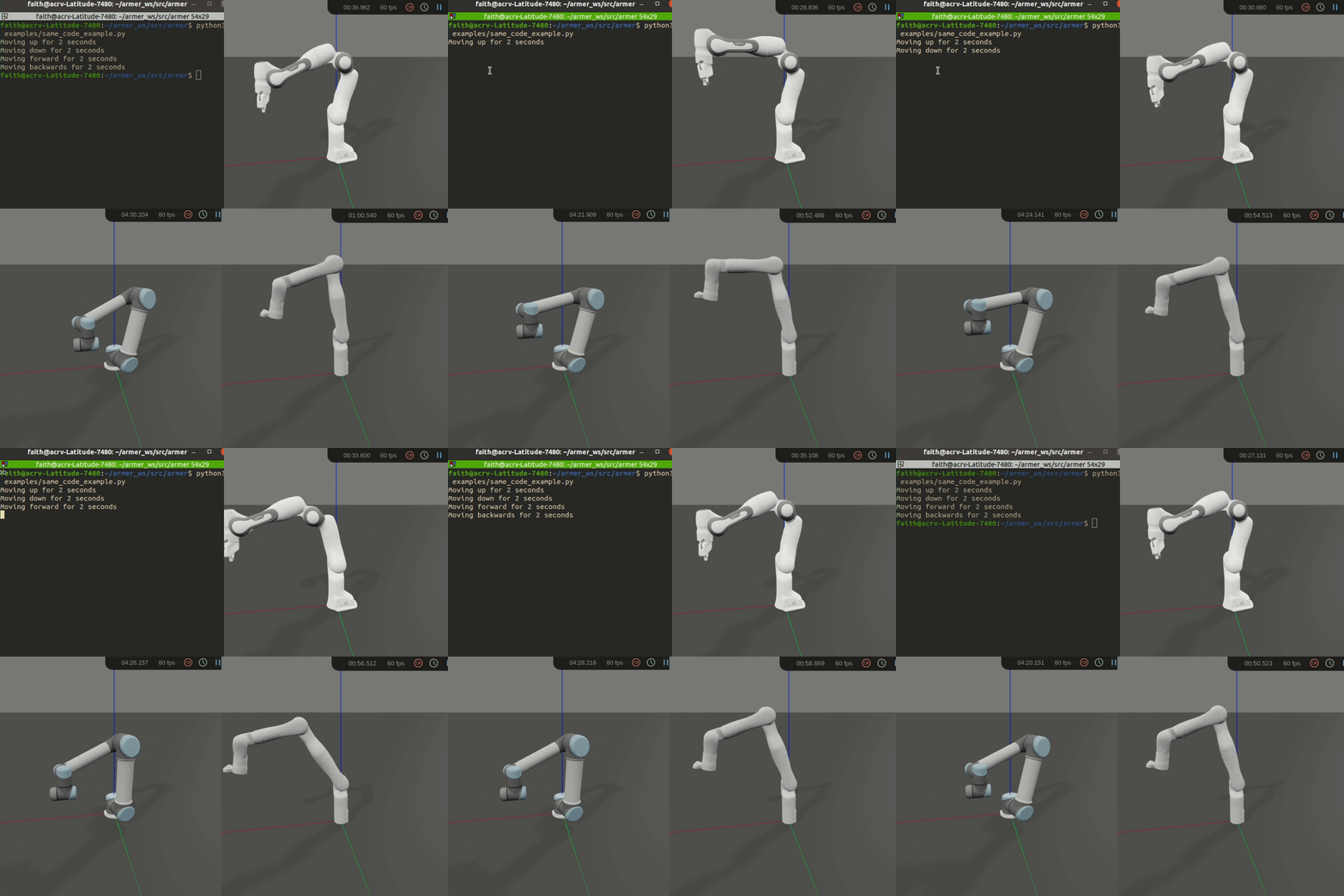
Below is a gif of 3 different simulated arms moving with the same cartesian velocity commands.
Requirements
Several ROS action servers, topics and services are set up by Armer to enable this functionality. A summary of these can be found here.
Armer is built on the Python Robotics Toolbox (RTB) and requires a URDF loaded RTB model to calculate the required movement kinematics, RTB comes with browser based simulator Swift which Armer uses as an out of the box simulator.
Due to these supporting packages using Armer with a manipulator will require several requirements:
Software requirements
- Python >= 3.6
- ROS Noetic
- Robotics Toolbox for Python
- QCR repos
- Chrome browser (for using Swift sim)
Robot specific requirements
- ROS drivers with joint velocity controllers
- Robotics Toolbox model
Installation
Copy and paste the following code snippet into a terminal to create a new catkin workspace and install Armer to it. Note this script will also add the workspace to be sourced every time a bash terminal is opened.
sudo apt install python3-pip
mkdir -p ~/armer_ws/src && cd ~/armer_ws/src
git clone https://github.com/qcr/armer.git && git clone https://github.com/qcr/armer_msgs
cd .. && rosdep install --from-paths src --ignore-src -r -y
catkin_make
echo "source ~/armer_ws/devel/setup.bash" >> ~/.bashrc
source ~/armer_ws/devel/setup.bash
echo "Installation complete!"
Supported Arms
Armer relies on the manipulator's ROS driver to communicate with the low level hardware so the the ROS drivers must be started along side Armer.
Currently Armer driver has packages that launches Armer and the target manipulator's drivers are bundled together. If your arm model has a hardware package, control should be a fairly plug and play experience. (An experience we are still working on so please let us know if it isn't.). Below are the github pages to arms with hardware packages. Install directions can be found on their respective pages.
-
Franka Panda: https://github.com/qcr/armer_panda
-
Universal Robot UR3: https://github.com/qcr/armer_ur
-
Universal Robot UR5: https://github.com/qcr/armer_ur
-
Universal Robot UR10: https://github.com/qcr/armer_ur
-
ABB IRB6700: https://github.com/qcr/armer_abb
For more information on setting up manipulators not listed here see the Armer documentation, Supported Arms.
Usage
The Armer interface can be launched with the following command:
roslaunch armer_{ROBOT_MODEL} robot_bringup.launch config:={PATH_TO_CONFIG_YAML_FILE} sim:={true/false}
After launching, an arm can be controlled in several ways. Some quick tutorials can be referenced below:
- Joint velocity control
- Joint position control
- End effector Cartesian velocity control
- End effector Cartesian position control
- End effector Cartesian velocity control with guarded motion
For more information and examples see the Armer documentation

 1.2k Dec 29, 2022
 395 Jan 06, 2023
 381 Dec 22, 2022
 3 Nov 24, 2022
 225 Nov 13, 2022
 4 Sep 14, 2022
 2 Oct 18, 2021
 4 Feb 14, 2022
 512 Dec 29, 2022
 529 Jan 02, 2023
 110 Dec 20, 2022
 36 Dec 09, 2022
 17 Oct 17, 2022
 5 Aug 25, 2022
 33 Dec 29, 2022
 4 Oct 31, 2022
 141 Dec 29, 2022
 43 Nov 18, 2022
 170.1k Jan 04, 2023
 12 Jul 07, 2022