Tree Nested PyTorch Tensor Lib

Overview

DI-treetensor

PyPI PyPI - Python Version Loc Comments

Docs Deploy Code Test Badge Creation Package Release codecov

GitHub stars GitHub forks GitHub commit activity GitHub issues GitHub pulls Contributors GitHub license

treetensor is a generalized tree-based tensor structure mainly developed by OpenDILab Contributors.

Almost all the operation can be supported in form of trees in a convenient way to simplify the structure processing when the calculation is tree-based.

Installation

You can simply install it with pip command line from the official PyPI site.

pip install di-treetensor

For more information about installation, you can refer to Installation.

Documentation

The detailed documentation are hosted on https://opendilab.github.io/DI-treetensor.

Only english version is provided now, the chinese documentation is still under development.

Quick Start

You can easily create a tree value object based on FastTreeValue.

import builtins
import os
from functools import partial

import treetensor.torch as torch

print = partial(builtins.print, sep=os.linesep)

if __name__ == '__main__':
    # create a tree tensor
    t = torch.randn({'a': (2, 3), 'b': {'x': (3, 4)}})
    print(t)
    print(torch.randn(4, 5))  # create a normal tensor
    print()

    # structure of tree
    print('Structure of tree')
    print('t.a:', t.a)  # t.a is a native tensor
    print('t.b:', t.b)  # t.b is a tree tensor
    print('t.b.x', t.b.x)  # t.b.x is a native tensor
    print()

    # math calculations
    print('Math calculation')
    print('t ** 2:', t ** 2)
    print('torch.sin(t).cos()', torch.sin(t).cos())
    print()

    # backward calculation
    print('Backward calculation')
    t.requires_grad_(True)
    t.std().arctan().backward()
    print('grad of t:', t.grad)
    print()

    # native operation
    # all the ops can be used as the original usage of `torch`
    print('Native operation')
    print('torch.sin(t.a)', torch.sin(t.a))  # sin of native tensor

The result should be

<Tensor 0x7f0dae602760>
├── a --> tensor([[-1.2672, -1.5817, -0.3141],
│                 [ 1.8107, -0.1023,  0.0940]])
└── b --> <Tensor 0x7f0dae602820>
    └── x --> tensor([[ 1.2224, -0.3445, -0.9980, -0.4085],
                      [ 1.5956,  0.8825, -0.5702, -0.2247],
                      [ 0.9235,  0.4538,  0.8775, -0.2642]])

tensor([[-0.9559,  0.7684,  0.2682, -0.6419,  0.8637],
        [ 0.9526,  0.2927, -0.0591,  1.2804, -0.2455],
        [ 0.4699, -0.9998,  0.6324, -0.6885,  1.1488],
        [ 0.8920,  0.4401, -0.7785,  0.5931,  0.0435]])

Structure of tree
t.a:
tensor([[-1.2672, -1.5817, -0.3141],
        [ 1.8107, -0.1023,  0.0940]])
t.b:
<Tensor 0x7f0dae602820>
└── x --> tensor([[ 1.2224, -0.3445, -0.9980, -0.4085],
                  [ 1.5956,  0.8825, -0.5702, -0.2247],
                  [ 0.9235,  0.4538,  0.8775, -0.2642]])

t.b.x
tensor([[ 1.2224, -0.3445, -0.9980, -0.4085],
        [ 1.5956,  0.8825, -0.5702, -0.2247],
        [ 0.9235,  0.4538,  0.8775, -0.2642]])

Math calculation
t ** 2:
<Tensor 0x7f0dae602eb0>
├── a --> tensor([[1.6057, 2.5018, 0.0986],
│                 [3.2786, 0.0105, 0.0088]])
└── b --> <Tensor 0x7f0dae60c040>
    └── x --> tensor([[1.4943, 0.1187, 0.9960, 0.1669],
                      [2.5458, 0.7789, 0.3252, 0.0505],
                      [0.8528, 0.2059, 0.7699, 0.0698]])

torch.sin(t).cos()
<Tensor 0x7f0dae621910>
├── a --> tensor([[0.5782, 0.5404, 0.9527],
│                 [0.5642, 0.9948, 0.9956]])
└── b --> <Tensor 0x7f0dae6216a0>
    └── x --> tensor([[0.5898, 0.9435, 0.6672, 0.9221],
                      [0.5406, 0.7163, 0.8578, 0.9753],
                      [0.6983, 0.9054, 0.7185, 0.9661]])


Backward calculation
grad of t:
<Tensor 0x7f0dae60c400>
├── a --> tensor([[-0.0435, -0.0535, -0.0131],
│                 [ 0.0545, -0.0064, -0.0002]])
└── b --> <Tensor 0x7f0dae60cbe0>
    └── x --> tensor([[ 0.0357, -0.0141, -0.0349, -0.0162],
                      [ 0.0476,  0.0249, -0.0213, -0.0103],
                      [ 0.0262,  0.0113,  0.0248, -0.0116]])


Native operation
torch.sin(t.a)
tensor([[-0.9543, -0.9999, -0.3089],
        [ 0.9714, -0.1021,  0.0939]], grad_fn=<SinBackward>)

For more quick start explanation and further usage, take a look at:

Extension

If you need to translate treevalue object to runnable source code, you may use the potc-treevalue plugin with the installation command below

pip install DI-treetensor[potc]

In potc, you can translate the objects to runnable python source code, which can be loaded to objects afterwards by the python interpreter, like the following graph

potc_system

For more information, you can refer to

Contribution

We appreciate all contributions to improve DI-treetensor, both logic and system designs. Please refer to CONTRIBUTING.md for more guides.

And users can join our slack communication channel, or contact the core developer HansBug for more detailed discussion.

License

DI-treetensor released under the Apache 2.0 license.

You might also like...
 Pretty Tensor - Fluent Neural Networks in TensorFlow
Pretty Tensor - Fluent Neural Networks in TensorFlow

Pretty Tensor provides a high level builder API for TensorFlow. It provides thin wrappers on Tensors so that you can easily build multi-layer neural networks.

A torch.Tensor-like DataFrame library supporting multiple execution runtimes and Arrow as a common memory format

TorchArrow (Warning: Unstable Prototype) This is a prototype library currently under heavy development. It does not currently have stable releases, an

Gradient-free global optimization algorithm for multidimensional functions based on the low rank tensor train format

ttopt Description Gradient-free global optimization algorithm for multidimensional functions based on the low rank tensor train (TT) format and maximu

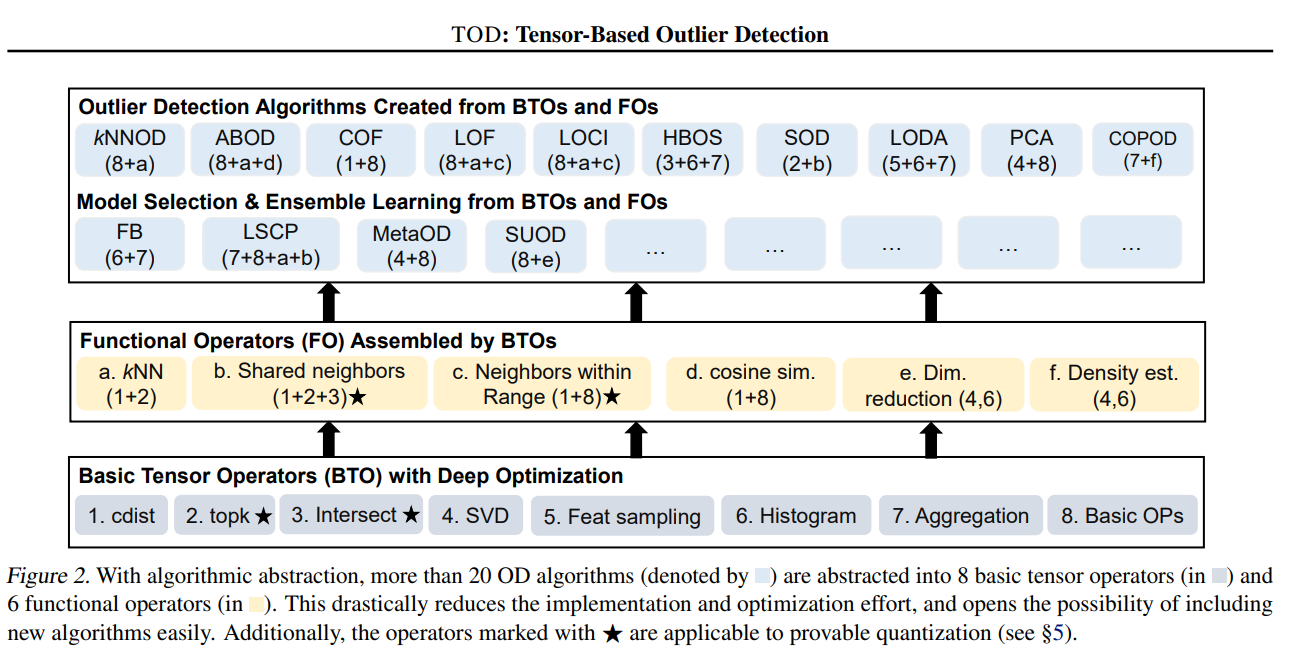
 (Py)TOD: Tensor-based Outlier Detection, A General GPU-Accelerated Framework
(Py)TOD: Tensor-based Outlier Detection, A General GPU-Accelerated Framework

(Py)TOD: Tensor-based Outlier Detection, A General GPU-Accelerated Framework Background: Outlier detection (OD) is a key data mining task for identify

Code to reproduce the results in the paper
Code to reproduce the results in the paper "Tensor Component Analysis for Interpreting the Latent Space of GANs".

Tensor Component Analysis for Interpreting the Latent Space of GANs [ paper | project page ] Code to reproduce the results in the paper "Tensor Compon

Self-Correcting Quantum Many-Body Control using Reinforcement Learning with Tensor Networks

Self-Correcting Quantum Many-Body Control using Reinforcement Learning with Tensor Networks This repository contains the code and data for the corresp

mbrl-lib is a toolbox for facilitating development of Model-Based Reinforcement Learning algorithms.

mbrl-lib is a toolbox for facilitating development of Model-Based Reinforcement Learning algorithms. It provides easily interchangeable modeling and planning components, and a set of utility functions that allow writing model-based RL algorithms with only a few lines of code.

OpenDILab RL Kubernetes Custom Resource and Operator Lib

DI Orchestrator DI Orchestrator is designed to manage DI (Decision Intelligence) jobs using Kubernetes Custom Resource and Operator. Prerequisites A w

Jittor Medical Segmentation Lib -- The assignment of Pattern Recognition course (2021 Spring) in Tsinghua University

THU模式识别2021春 -- Jittor 医学图像分割 模型列表 本仓库收录了课程作业中同学们采用jittor框架实现的如下模型: UNet SegNet DeepLab V2 DANet EANet HarDNet及其改动HarDNet_alter PSPNet OCNet OCRNet DL

Comments
  • PyTorch OP List(P0)

    PyTorch OP List(P0)

    reference: https://pytorch.org/docs/1.8.0/torch.html

    common

    • [x] numel
    • [x] cpu
    • [x] cuda
    • [x] to

    Creation Ops

    • [x] torch.zeros_like
    • [x] torch.randn_like
    • [x] torch.randint_like
    • [x] torch.ones_like
    • [x] torch.full_like
    • [x] torch.empty_like
    • [x] torch.zeros
    • [x] torch.randn
    • [x] torch.randint
    • [x] torch.ones
    • [x] torch.full
    • [x] torch.empty

    Indexing, Slicing, Joining, Mutating Ops

    • [x] cat
    • [x] chunk
    • [ ] gather
    • [x] index_select
    • [x] masked_select
    • [x] reshape
    • [ ] scatter
    • [x] split
    • [x] squeeze
    • [x] stack
    • [ ] tile
    • [ ] unbind
    • [x] unsqueeze
    • [x] where

    Math Ops

    Pointwise Ops
    • [x] add
    • [x] sub
    • [x] mul
    • [x] div
    • [x] pow
    • [x] neg
    • [x] abs
    • [x] sign
    • [x] floor
    • [x] ceil
    • [x] round
    • [x] sigmoid
    • [x] clamp
    • [x] exp
    • [x] exp2
    • [x] sqrt
    • [x] log
    • [x] log10
    • [x] log2
    Reduction Ops
    • [ ] argmax
    • [ ] argmin
    • [x] all
    • [x] any
    • [x] max
    • [x] min
    • [x] dist
    • [ ] logsumexp
    • [x] mean
    • [ ] median
    • [x] norm
    • [ ] prod
    • [x] std
    • [x] sum
    • [ ] unique
    Comparison Ops
    • [ ] argsort
    • [x] eq
    • [x] ge
    • [x] gt
    • [x] isfinite
    • [x] isinf
    • [x] isnan
    • [x] le
    • [x] lt
    • [x] ne
    • [ ] sort
    • [ ] topk
    Other Ops
    • [ ] cdist
    • [x] clone
    • [ ] flip

    BLAS and LAPACK Ops

    • [ ] addbmm
    • [ ] addmm
    • [ ] bmm
    • [x] dot
    • [x] matmul
    • [x] mm
    enhancement 
    opened by PaParaZz1 3
  • PyTorch OP Doc List

    PyTorch OP Doc List

    P0

    • [x] cpu
    • [x] cuda
    • [x] to
    • [x] torch.zeros_like
    • [x] torch.randn_like
    • [x] torch.ones_like
    • [x] torch.zeros
    • [x] torch.randn
    • [x] torch.randint
    • [x] torch.ones
    • [x] cat
    • [x] reshape
    • [x] split
    • [x] squeeze
    • [x] stack
    • [x] unsqueeze
    • [x] where
    • [x] abs
    • [x] add
    • [x] clamp
    • [x] div
    • [x] exp
    • [x] log
    • [x] sqrt
    • [x] sub
    • [x] sigmoid
    • [x] pow
    • [x] mul
    • [ ] argmax
    • [ ] argmin
    • [x] all
    • [x] any
    • [x] max
    • [x] min
    • [x] dist
    • [x] mean
    • [x] std
    • [x] sum
    • [x] eq
    • [x] ge
    • [x] gt
    • [x] le
    • [x] lt
    • [x] ne
    • [x] clone
    • [x] dot
    • [x] matmul
    • [x] mm

    P1

    • [x] numel
    • [x] torch.randint_like
    • [x] torch.full_like
    • [x] torch.empty_like
    • [x] torch.full
    • [x] torch.empty
    • [x] chunk
    • [ ] gather
    • [x] index_select
    • [x] masked_select
    • [ ] scatter
    • [ ] tile
    • [ ] unbind
    • [x] ceil
    • [x] exp2
    • [x] floor
    • [x] log10
    • [x] log2
    • [x] neg
    • [x] round
    • [x] sign
    • [ ] bmm

    P2

    • [ ] logsumexp
    • [ ] median
    • [x] norm
    • [ ] prod
    • [ ] unique
    • [ ] argsort
    • [x] isfinite
    • [x] isinf
    • [x] isnan
    • [ ] sort
    • [ ] topk
    • [ ] cdist
    • [ ] flip
    • [ ] addbmm
    • [ ] addmm
    opened by PaParaZz1 2
  • dev(hansbug): add stream support for paralleling the calculations in tree

    dev(hansbug): add stream support for paralleling the calculations in tree

    Here is an example:

    import time
    
    import numpy as np
    import torch
    
    import treetensor.torch as ttorch
    
    N, M, T = 200, 2, 50
    S1, S2, S3 = 512, 1024, 2048
    
    
    def test_min():
        a = ttorch.randn({f'a{i}': (S1, S2) for i in range(N // M)}, device='cuda')
        b = ttorch.randn({f'a{i}': (S2, S3) for i in range(N // M)}, device='cuda')
    
        result = []
        for i in range(T):
            _start_time = time.time()
    
            _ = ttorch.matmul(a, b)
            torch.cuda.synchronize()
    
            _end_time = time.time()
            result.append(_end_time - _start_time)
    
        print('time cost: mean({}) std({})'.format(np.mean(result), np.std(result)))
    
    
    def test_native():
        a = {f'a{i}': torch.randn(S1, S2, device='cuda') for i in range(N)}
        b = {f'a{i}': torch.randn(S2, S3, device='cuda') for i in range(N)}
    
        result = []
        for i in range(T):
            _start_time = time.time()
    
            for key in a.keys():
                _ = torch.matmul(a[key], b[key])
            torch.cuda.synchronize()
    
            _end_time = time.time()
            result.append(_end_time - _start_time)
    
        print('time cost: mean({}) std({})'.format(np.mean(result), np.std(result)))
    
    
    def test_linear():
        a = ttorch.randn({f'a{i}': (S1, S2) for i in range(N)}, device='cuda')
        b = ttorch.randn({f'a{i}': (S2, S3) for i in range(N)}, device='cuda')
    
        result = []
        for i in range(T):
            _start_time = time.time()
    
            _ = ttorch.matmul(a, b)
            torch.cuda.synchronize()
    
            _end_time = time.time()
            result.append(_end_time - _start_time)
    
        print('time cost: mean({}) std({})'.format(np.mean(result), np.std(result)))
    
    
    def test_stream():
        a = ttorch.randn({f'a{i}': (S1, S2) for i in range(N)}, device='cuda')
        b = ttorch.randn({f'a{i}': (S2, S3) for i in range(N)}, device='cuda')
    
        ttorch.stream(M)
        result = []
        for i in range(T):
            _start_time = time.time()
    
            _ = ttorch.matmul(a, b)
            torch.cuda.synchronize()
    
            _end_time = time.time()
            result.append(_end_time - _start_time)
    
        print('time cost: mean({}) std({})'.format(np.mean(result), np.std(result)))
    
    
    def warmup():
        # warm up
        a = torch.randn(1024, 1024).cuda()
        b = torch.randn(1024, 1024).cuda()
        for _ in range(20):
            c = torch.matmul(a, b)
    
    
    if __name__ == '__main__':
        warmup()
        test_min()
        test_native()
        test_linear()
        test_stream()


    不过讲真,这个stream实际效果挺脆弱的,非常看tensor尺寸,大了小了都不行,GPU性能不够也不行,一弄不好还容易负优化,总之挺难伺候的。这部分如果想实用化的话得再研究研究。

    enhancement 
    opened by HansBug 1
  • Failure when try to convert between numpy and torch on Windows Python3.10

    Failure when try to convert between numpy and torch on Windows Python3.10

    See here: https://github.com/opendilab/DI-treetensor/runs/7820313811?check_suite_focus=true

    The bug is like

        @method_treelize(return_type=_get_tensor_class)
        def tensor(self: numpy.ndarray, *args, **kwargs):
    >       tensor_: torch.Tensor = torch.from_numpy(self)
    E       RuntimeError: Numpy is not available
    

    The only way I found to 'solve' this is to downgrade python to version3.9 to lower. So these tests will be skipped temporarily.

    bug 
    opened by HansBug 0
Releases(v0.4.0)
  • v0.4.0(Aug 14, 2022)

    What's Changed

    • dev(hansbug): remove support for py3.6 by @HansBug in https://github.com/opendilab/DI-treetensor/pull/12
    • pytorch upgrade to 1.12 by @zjowowen in https://github.com/opendilab/DI-treetensor/pull/11
    • dev(hansbug): add test for torch1.12.0 and python3.10 by @HansBug in https://github.com/opendilab/DI-treetensor/pull/13
    • dev(hansbug): add stream support for paralleling the calculations in tree by @HansBug in https://github.com/opendilab/DI-treetensor/pull/10

    New Contributors

    • @zjowowen made their first contribution in https://github.com/opendilab/DI-treetensor/pull/11

    Full Changelog: https://github.com/opendilab/DI-treetensor/compare/v0.3.0...v0.4.0

    Source code(tar.gz)
    Source code(zip)
  • v0.3.0(Jul 15, 2022)

    What's Changed

    • dev(hansbug): use newer version of treevalue 1.4.1 by @HansBug in https://github.com/opendilab/DI-treetensor/pull/9

    Full Changelog: https://github.com/opendilab/DI-treetensor/compare/v0.2.1...v0.3.0

    Source code(tar.gz)
    Source code(zip)
  • v0.2.1(Mar 22, 2022)

    What's Changed

    • fix(hansbug): fix uncompitable problem with walk by @HansBug in https://github.com/opendilab/DI-treetensor/pull/5
    • dev(hansbug): add tensor method for treetensor.numpy.ndarray by @HansBug in https://github.com/opendilab/DI-treetensor/pull/6
    • fix(hansbug): add subside support to all the functions. by @HansBug in https://github.com/opendilab/DI-treetensor/pull/7
    • doc(hansbug): add documentation for np.stack, np.split and other 3 functions. by @HansBug in https://github.com/opendilab/DI-treetensor/pull/8
    • release(hansbug): use version 0.2.1 by @HansBug in https://github.com/opendilab/DI-treetensor/pull/4

    New Contributors

    • @HansBug made their first contribution in https://github.com/opendilab/DI-treetensor/pull/5

    Full Changelog: https://github.com/opendilab/DI-treetensor/compare/v0.2.0...v0.2.1

    Source code(tar.gz)
    Source code(zip)
  • v0.2.0(Jan 4, 2022)

    • Use newer version of treevalue>=1.2.0
    • Add support of torch 1.10.0
    • Add support of potc

    Full Changelog: https://github.com/opendilab/DI-treetensor/compare/v0.1.0...v0.2.0

    Source code(tar.gz)
    Source code(zip)
  • v0.1.0(Dec 26, 2021)

  • v0.0.1(Sep 30, 2021)

Owner
OpenDILab
Open sourced Decision Intelligence (DI)
OpenDILab
「PyTorch Implementation of AnimeGANv2」を用いて、生成した顔画像を元の画像に上書きするデモ

AnimeGANv2-Face-Overlay-Demo PyTorch Implementation of AnimeGANv2を用いて、生成した顔画像を元の画像に上書きするデモです。

KazuhitoTakahashi 21 Oct 18, 2022
Official Implementation of DDOD (Disentangle your Dense Object Detector), ACM MM2021

Disentangle Your Dense Object Detector This repo contains the supported code and configuration files to reproduce object detection results of Disentan

loveSnowBest 51 Jan 07, 2023
This is an example of object detection on Micro bacterium tuberculosis using Mask-RCNN

Mask-RCNN on Mycobacterium tuberculosis This is an example of object detection on Mycobacterium Tuberculosis using Mask RCNN. Implement of Mask R-CNN

Jun-En Ding 1 Sep 16, 2021
DeLiGAN - This project is an implementation of the Generative Adversarial Network

This project is an implementation of the Generative Adversarial Network proposed in our CVPR 2017 paper - DeLiGAN : Generative Adversarial Net

Video Analytics Lab -- IISc 110 Sep 13, 2022
Official tensorflow implementation for CVPR2020 paper “Learning to Cartoonize Using White-box Cartoon Representations”

Tensorflow implementation for CVPR2020 paper “Learning to Cartoonize Using White-box Cartoon Representations”.

3.7k Dec 31, 2022
Head2Toe: Utilizing Intermediate Representations for Better OOD Generalization

Head2Toe: Utilizing Intermediate Representations for Better OOD Generalization Code for reproducing our results in the Head2Toe paper. Paper: arxiv.or

Google Research 62 Dec 12, 2022
Codes for the AAAI'22 paper "TransZero: Attribute-guided Transformer for Zero-Shot Learning"

TransZero [arXiv] This repository contains the testing code for the paper "TransZero: Attribute-guided Transformer for Zero-Shot Learning" accepted to

Shiming Chen 52 Jan 01, 2023
Tensorflow implementation of "BEGAN: Boundary Equilibrium Generative Adversarial Networks"

BEGAN in Tensorflow Tensorflow implementation of BEGAN: Boundary Equilibrium Generative Adversarial Networks. Requirements Python 2.7 or 3.x Pillow tq

Taehoon Kim 922 Dec 21, 2022
Authors implementation of LieTransformer: Equivariant Self-Attention for Lie Groups

LieTransformer This repository contains the implementation of the LieTransformer used for experiments in the paper LieTransformer: Equivariant self-at

35 Oct 18, 2022
Official code for paper "Optimization for Oriented Object Detection via Representation Invariance Loss".

Optimization for Oriented Object Detection via Representation Invariance Loss By Qi Ming, Zhiqiang Zhou, Lingjuan Miao, Xue Yang, and Yunpeng Dong. Th

ming71 56 Nov 28, 2022
This repo is for segmentation of T2 hyp regions in gliomas.

T2-Hyp-Segmentor This repo is for segmentation of T2 hyp regions in gliomas. By downloading the model from here you can use it to segment your T2w ima

1 Jan 18, 2022
Taking A Closer Look at Domain Shift: Category-level Adversaries for Semantics Consistent Domain Adaptation

Taking A Closer Look at Domain Shift: Category-level Adversaries for Semantics Consistent Domain Adaptation (CVPR2019) This is a pytorch implementatio

Yawei Luo 280 Jan 01, 2023
Python utility to generate filesystem content for Obsidian.

Security Vault Generator Quickly parse, format, and output common frameworks/content for Obsidian.md. There is a strong focus on MITRE ATT&CK because

Justin Angel 73 Dec 02, 2022
A PyTorch re-implementation of the paper 'Exploring Simple Siamese Representation Learning'. Reproduced the 67.8% Top1 Acc on ImageNet.

Exploring simple siamese representation learning This is a PyTorch re-implementation of the SimSiam paper on ImageNet dataset. The results match that

Taojiannan Yang 72 Nov 09, 2022
Python package facilitating the use of Bayesian Deep Learning methods with Variational Inference for PyTorch

PyVarInf PyVarInf provides facilities to easily train your PyTorch neural network models using variational inference. Bayesian Deep Learning with Vari

342 Dec 02, 2022
Source code for paper: Knowledge Inheritance for Pre-trained Language Models

Knowledge-Inheritance Source code paper: Knowledge Inheritance for Pre-trained Language Models (preprint). The trained model parameters (in Fairseq fo

THUNLP 31 Nov 19, 2022
PyTorch code for training MM-DistillNet for multimodal knowledge distillation

There is More than Meets the Eye: Self-Supervised Multi-Object Detection and Tracking with Sound by Distilling Multimodal Knowledge MM-DistillNet is a

51 Dec 20, 2022
SeisComP/SeisBench interface to enable deep-learning (re)picking in SeisComP

scdlpicker SeisComP/SeisBench interface to enable deep-learning (re)picking in SeisComP Objective This is a simple deep learning (DL) repicker module

Joachim Saul 6 May 13, 2022
Code and project page for ICCV 2021 paper "DisUnknown: Distilling Unknown Factors for Disentanglement Learning"

DisUnknown: Distilling Unknown Factors for Disentanglement Learning See introduction on our project page Requirements PyTorch = 1.8.0 torch.linalg.ei

Sitao Xiang 24 May 16, 2022
Compute execution plan: A DAG representation of work that you want to get done. Individual nodes of the DAG could be simple python or shell tasks or complex deeply nested parallel branches or embedded DAGs themselves.

Hello from magnus Magnus provides four capabilities for data teams: Compute execution plan: A DAG representation of work that you want to get done. In

12 Feb 08, 2022