Generate text captions for images from their CLIP embeddings. Includes PyTorch model code and example training script.

Overview

clip-text-decoder

Generate text captions for images from their CLIP embeddings. Includes PyTorch model code and example training script.

Example Predictions

Example captions were computed with the pretrained model mentioned below.

"A man riding a wave on top of a surfboard."

A surfer riding a wave

A baseball player is swinging a bat at a ball.
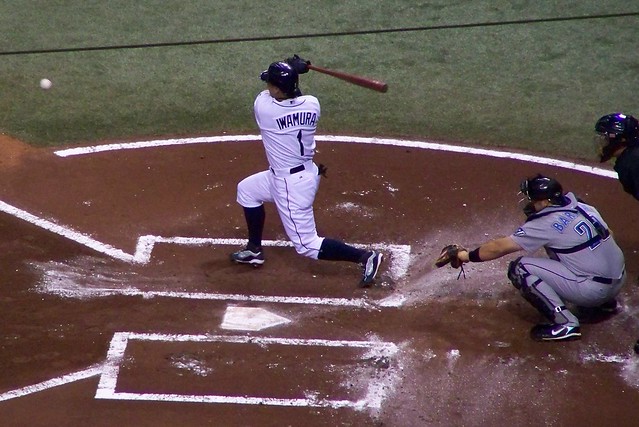
Baseball player

"A dog running across a field with a frisbee."

Dog with frisbee

Installation

Install for easier access to the following objects/classes:

  • clip_text_decoder.datasets.ClipCocoCaptionsDataset
  • clip_text_decoder.models.ClipDecoder
  • clip_text_decoder.models.ClipDecoderInferenceModel
  • clip_text_decoder.tokenizer.Tokenizer

The train.py script will not be available in the installed package, since it's located in the root directory. To train new models, either clone this repository or recreate train.py locally.

Using pip:

pip install clip-text-decoder

From source:

git clone https://github.com/fkodom/clip-text-decoder.git
cd clip-text-decoder
pip install .

NOTE: You'll also need to install openai/CLIP to encode images with CLIP. This is also required by ClipCocoCaptionsDataset to build the captions dataset the first time (cached for subsequent calls).

pip install "clip @ git+https://github.com/openai/CLIP.git"

For technical reasons, the CLIP dependency can't be included in the PyPI package, since it's not an officially published package.

Training

Open In Colab

Launch your own training session using the provided script (train.py):

python train.py --max-epochs 5

Training CLI arguments, along with their default values:

--max-epochs 5  # (int)
--num-layers 6  # (int)
--dim-feedforward 256  # (int)
--precision 16  # (16 or 32)
--seed 0  # (int)

Inference

The training script will produce a model.zip archive, containing the Tokenizer and trained model parameters. To perform inference with it:

import clip
from PIL import Image
import torch

from clip_text_decoder.model import ClipDecoderInferenceModel

device = "cuda" if torch.cuda.is_available() else "cpu"
model = ClipDecoderInferenceModel.load("path/to/model.zip").to(device)
clip_model, clip_preprocessor = clip.load("ViT-B/32", device=device, jit=False)

# Create a blank dummy image
dummy_image = Image.new("RGB", (224, 224))
preprocessed = clip_preprocessor(dummy_image).to(device)
# Add a batch dimension using '.unsqueeze(0)'
encoded = clip_model.encode_image(preprocessed.unsqueeze(0))
text = model(encoded)

print(text)
# Probably some nonsense, because we used a dummy image.

Pretrained Models

A pretrained CLIP decoder is hosted in my Google Drive, and can easily be downloaded by:

from clip_text_decoder.model import ClipDecoderInferenceModel

model = ClipDecoderInferenceModel.download_pretrained()

To cache the pretrained model locally, so that it's not re-downloaded each time:

model = ClipDecoderInferenceModel.download_pretrained("/path/to/model.zip")

Shortcomings

  • Only works well with COCO-style images. If you go outside the distribution of COCO objects, you'll get nonsense text captions.
  • Relatively short training time. Even within the COCO domain, you'll occasionally see incorrect captions. Quite a few captions will have bad grammar, repetitive descriptors, etc.
Comments
  • Decoding Text Embeddings Coded Using Hugging Face ClipTextModel

    Decoding Text Embeddings Coded Using Hugging Face ClipTextModel

    Suppose that I have text embeddings created using Hugging Face's ClipTextModel using the following method:

    import torch
    from transformers import CLIPTokenizer, CLIPTextModel
    
    class_list = ["i love going home and playing with my wife and kids", "i love going home", "playing with my wife and kids", 
    "family", "war", "writing"]
    
    model = CLIPTextModel.from_pretrained("openai/clip-vit-large-patch14")
    tokenizer = CLIPTokenizer.from_pretrained("openai/clip-vit-large-patch14")
    
    inputs = tokenizer(class_list, padding=True, return_tensors="pt")
    outputs = model(**inputs)
    hidden_state = outputs.last_hidden_state
    embeddings = outputs.pooler_output
    

    Questions:

    1. Is It possible to use the clip-text-decoder to convert the embeddings back to text?
    2. If it is indeed possible to do so, could you provide an example of how?

    Looking forward to receiving your feedback.

    opened by mbdzi 6
  • Fix string error when loading clip models.

    Fix string error when loading clip models.

    error

    The model name string ( VIT-xxx ) in the check_vision_backbone function is not compatible with the model name string ( ViT-xxx ) of the clip repository, which will cause at least one error in check_vision_backbone function or when loading the clip model.

    solution

    In this PR, the model name string in the check_vision_backbone function is modified to ViT-xxx to make it compatible with the clip repository.

    opened by Adenialzz 1
  • BLIP vision backbone

    BLIP vision backbone

    • Added blip backbone; still cleaning up last pieces
    • Bug fixes for training script, and remove debug code.
    • Fix dependencies in test workflow; update README statistics
    • Fix test issue with CUDA device
    • Update unit tests for newer Python, torch versions
    • Test up to Python 3.10
    • Test up to Python 3.9
    • Install lavis first
    opened by fkodom 0
  • Feature: Beam Search

    Feature: Beam Search

    • Add beam search, clip dependency to setup.py
    • Fix installation instructions
    • Remove main clause
    • Add '--beam-size' option to 'train.py' script.
    • Update README; propagate the '--beam-size' arg through eval functions
    • Update setup.cfg, add pre-commit hooks
    • Reformat images
    • Remove fixed image width
    • Add detail to README; comments to call method for beam search
    • Updated README headline
    opened by fkodom 0
  • Bug Fixes for Broken Tests

    Bug Fixes for Broken Tests

    • Cache the old fashioned way :)
    • Fix silly typo in test for image caption model
    • Apply black and isort formatting
    • Install latest version of 'black', reapply formatting
    • Fix flake8 issue (duplicate function definition), and install latest patch version of pytorch for tests.
    • Skip slow tests by default, add 'slow' marker to inference model tests.
    opened by fkodom 0
  • GPT2 Decoder

    GPT2 Decoder

    • Update model to use DistilGPT2 as a pre-trained decoder.
    • Removed tokenizer (no longer used), fixed bugs in Model source file, and updated model unit tests.
    • Backwards compatibility for 'gdown.download' method.
    • Update installation requirements, caption examples in README
    opened by fkodom 0
  • Upgrade CodeSee workflow to version 2

    Upgrade CodeSee workflow to version 2

    CodeSee is a code visibility platform.

    This change updates the CodeSee workflow file to the latest version for security, maintenance, and support improvements (see changelog below).

    That workflow file:

    • runs CodeSee's code analysis on every PR push and merge
    • uploads that analysis to CodeSee.
    • It does not transmit your code.

    The code analysis is used to generate maps and insights about this codebase.

    CodeSee workflow changelog:

    • Improved security: Updates permission to be read-only.
    • Improved future maintenance: Replaces the body of the workflow with a single github action: codesee-action. This makes it significantly easier for CodeSee to introduce future improvements and fixes without requiring another PR like this.
    • Improved Python support: The action now properly supports Python 3.11, and will continue to support new Python versions as they are released.
    opened by codesee-maps[bot] 1
  • Incompatible checksum error

    Incompatible checksum error

    I see the following error when trying to load the pretrained model.

        tokenizer=pickle.loads(tokenizer_buffer.read()),
      File "stringsource", line 6, in spacy.pipeline.trainable_pipe.__pyx_unpickle_TrainablePipe
    _pickle.PickleError: Incompatible checksums (102742709 vs 0x417ddeb = (cfg, model, name, vocab))
    

    Am I missing something?

    opened by dapurv5 0
Releases(1.4.4)
  • 1.4.4(Nov 7, 2022)

    What's Changed

    • Fix string error when loading clip models. by @Adenialzz in https://github.com/fkodom/clip-text-decoder/pull/12

    New Contributors

    • @Adenialzz made their first contribution in https://github.com/fkodom/clip-text-decoder/pull/12

    Full Changelog: https://github.com/fkodom/clip-text-decoder/compare/1.4.3...1.4.4

    Source code(tar.gz)
    Source code(zip)
  • 1.4.3(Nov 7, 2022)

    What's Changed

    • Refactor Dataset by @fkodom in https://github.com/fkodom/clip-text-decoder/pull/11

    Full Changelog: https://github.com/fkodom/clip-text-decoder/compare/1.4.2...1.4.3

    Source code(tar.gz)
    Source code(zip)
  • 1.4.2(Oct 26, 2022)

    What's Changed

    • Huggingface Evaluate by @fkodom in https://github.com/fkodom/clip-text-decoder/pull/9

    Full Changelog: https://github.com/fkodom/clip-text-decoder/compare/1.4.1...1.4.2

    Source code(tar.gz)
    Source code(zip)
  • 1.4.1(Oct 26, 2022)

    What's Changed

    • Datapipes by @fkodom in https://github.com/fkodom/clip-text-decoder/pull/8

    Full Changelog: https://github.com/fkodom/clip-text-decoder/compare/1.4.0...1.4.1

    Source code(tar.gz)
    Source code(zip)
  • 1.4.0(Oct 23, 2022)

    What's Changed

    • BLIP vision backbone by @fkodom in https://github.com/fkodom/clip-text-decoder/pull/7

    Full Changelog: https://github.com/fkodom/clip-text-decoder/compare/1.3.0...1.4.0

    Source code(tar.gz)
    Source code(zip)
  • 1.3.0(Oct 2, 2022)

    What's Changed

    • Feature: Beam Search by @fkodom in https://github.com/fkodom/clip-text-decoder/pull/5
    • Bug Fix: PyPI Release by @fkodom in https://github.com/fkodom/clip-text-decoder/pull/6

    Full Changelog: https://github.com/fkodom/clip-text-decoder/compare/1.2.0...1.3.0

    Source code(tar.gz)
    Source code(zip)
  • 1.2.0(Jan 29, 2022)

    What's Changed

    • Cache CLIP embeddings for the dataset, rather than recomputing them each time.

    • Reduce model file sizes by storing at lower precision

    • Add an ImageCaptionInferenceModel class for easier out-of-the-box use

    • Fix some broken unit tests

    • Better Data Caching by @fkodom in https://github.com/fkodom/clip-text-decoder/pull/3

    • Bug Fixes for Broken Tests by @fkodom in https://github.com/fkodom/clip-text-decoder/pull/4

    Full Changelog: https://github.com/fkodom/clip-text-decoder/compare/1.1.0...1.2.0

    Source code(tar.gz)
    Source code(zip)
  • 1.1.0(Dec 22, 2021)

    What's Changed

    • GPT2 Decoder by @fkodom in https://github.com/fkodom/clip-text-decoder/pull/2

    New Contributors

    • @fkodom made their first contribution in https://github.com/fkodom/clip-text-decoder/pull/2

    Full Changelog: https://github.com/fkodom/clip-text-decoder/compare/1.0.0...1.1.0

    Source code(tar.gz)
    Source code(zip)
  • 0.1.1(Nov 14, 2021)

  • 0.1.0(Nov 14, 2021)

Owner
Frank Odom
Director of Innovation at Plainsight. I like neural nets, and neural nets like me.
Frank Odom
CCPD: a diverse and well-annotated dataset for license plate detection and recognition

CCPD (Chinese City Parking Dataset, ECCV) UPdate on 10/03/2019. CCPD Dataset is now updated. We are confident that images in subsets of CCPD is much m

detectRecog 1.8k Dec 30, 2022
MATLAB codes of the book "Digital Image Processing Fourth Edition" converted to Python

Digital Image Processing Python MATLAB codes of the book "Digital Image Processing Fourth Edition" converted to Python TO-DO: Refactor scripts, curren

Merve Noyan 24 Oct 16, 2022
(CVPR2021) Kaleido-BERT: Vision-Language Pre-training on Fashion Domain

Kaleido-BERT: Vision-Language Pre-training on Fashion Domain Mingchen Zhuge*, Dehong Gao*, Deng-Ping Fan#, Linbo Jin, Ben Chen, Haoming Zhou, Minghui

248 Dec 04, 2022
[3DV 2021] A Dataset-Dispersion Perspective on Reconstruction Versus Recognition in Single-View 3D Reconstruction Networks

dispersion-score Official implementation of 3DV 2021 Paper A Dataset-dispersion Perspective on Reconstruction versus Recognition in Single-view 3D Rec

Yefan 7 May 28, 2022
Least Square Calibration for Peer Reviews

Least Square Calibration for Peer Reviews Requirements gurobipy - for solving convex programs GPy - for Bayesian baseline numpy pandas To generate p

Sigma <a href=[email protected]"> 1 Nov 01, 2021
Replication package for the manuscript "Using Personality Detection Tools for Software Engineering Research: How Far Can We Go?" submitted to TOSEM

tosem2021-personality-rep-package Replication package for the manuscript "Using Personality Detection Tools for Software Engineering Research: How Far

Collaborative Development Group 1 Dec 13, 2021
A Multi-modal Model Chinese Spell Checker Released on ACL2021.

ReaLiSe ReaLiSe is a multi-modal Chinese spell checking model. This the office code for the paper Read, Listen, and See: Leveraging Multimodal Informa

DaDa 106 Dec 29, 2022
PyTorch implementation of "VRT: A Video Restoration Transformer"

VRT: A Video Restoration Transformer Jingyun Liang, Jiezhang Cao, Yuchen Fan, Kai Zhang, Rakesh Ranjan, Yawei Li, Radu Timofte, Luc Van Gool Computer

Jingyun Liang 837 Jan 09, 2023
This project provides the code and datasets for 'CapSal: Leveraging Captioning to Boost Semantics for Salient Object Detection', CVPR 2019.

Code-and-Dataset-for-CapSal This project provides the code and datasets for 'CapSal: Leveraging Captioning to Boost Semantics for Salient Object Detec

lu zhang 48 Aug 19, 2022
The code is for the paper "A Self-Distillation Embedded Supervised Affinity Attention Model for Few-Shot Segmentation"

SD-AANet The code is for the paper "A Self-Distillation Embedded Supervised Affinity Attention Model for Few-Shot Segmentation" [arxiv] Overview confi

cv516Buaa 9 Nov 07, 2022
Implementation of average- and worst-case robust flatness measures for adversarial training.

Relating Adversarially Robust Generalization to Flat Minima This repository contains code corresponding to the MLSys'21 paper: D. Stutz, M. Hein, B. S

David Stutz 13 Nov 27, 2022
MetaAvatar: Learning Animatable Clothed Human Models from Few Depth Images

MetaAvatar: Learning Animatable Clothed Human Models from Few Depth Images This repository contains the implementation of our paper MetaAvatar: Learni

sfwang 96 Dec 13, 2022
Implementation for paper MLP-Mixer: An all-MLP Architecture for Vision

MLP Mixer Implementation for paper MLP-Mixer: An all-MLP Architecture for Vision. Give us a star if you like this repo. Author: Github: bangoc123 Emai

Ngoc Nguyen Ba 86 Dec 10, 2022
METS/ALTO OCR enhancing tool by the National Library of Luxembourg (BnL)

Nautilus-OCR The National Library of Luxembourg (BnL) started its first initiative in digitizing newspapers, with layout recognition and OCR on articl

National Library of Luxembourg 36 Dec 05, 2022
Cognition-aware Cognate Detection

Cognition-aware Cognate Detection The repository which contains our code for our EACL 2021 paper titled, "Cognition-aware Cognate Detection". This wor

Prashant K. Sharma 1 Feb 01, 2022
PyTorch implementation of the Transformer in Post-LN (Post-LayerNorm) and Pre-LN (Pre-LayerNorm).

Transformer-PyTorch A PyTorch implementation of the Transformer from the paper Attention is All You Need in both Post-LN (Post-LayerNorm) and Pre-LN (

Jared Wang 22 Feb 27, 2022
Bagua is a flexible and performant distributed training algorithm development framework.

Bagua is a flexible and performant distributed training algorithm development framework.

786 Dec 17, 2022
(CVPR 2022) A minimalistic mapless end-to-end stack for joint perception, prediction, planning and control for self driving.

LAV Learning from All Vehicles Dian Chen, Philipp Krähenbühl CVPR 2022 (also arXiV 2203.11934) This repo contains code for paper Learning from all veh

Dian Chen 300 Dec 15, 2022
Python scripts for performing stereo depth estimation using the HITNET Tensorflow model.

HITNET-Stereo-Depth-estimation Python scripts for performing stereo depth estimation using the HITNET Tensorflow model from Google Research. Stereo de

Ibai Gorordo 76 Jan 02, 2023
TLDR: Twin Learning for Dimensionality Reduction

TLDR (Twin Learning for Dimensionality Reduction) is an unsupervised dimensionality reduction method that combines neighborhood embedding learning with the simplicity and effectiveness of recent self

NAVER 105 Dec 28, 2022